
ART
Therukoothu
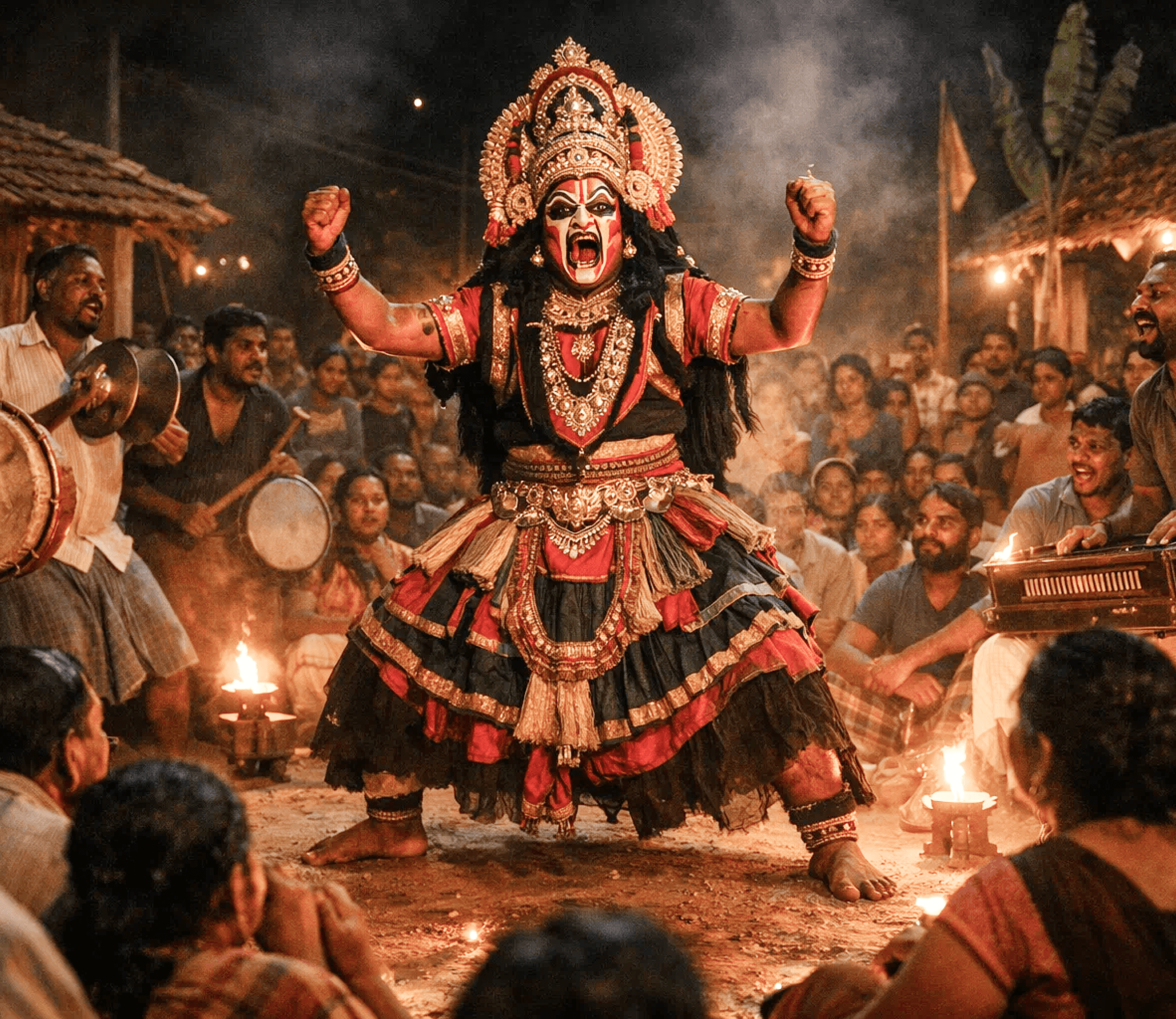
A vibrant traditional folk theatre from Tamil Nadu, India, known as "street play." This ancient art form blends dance, music, songs, mime, and drama to enact stories from epics like Mahabharata and Ramayana. Originating centuries ago in rural areas such as Salem and Gingee, performers don elaborate costumes and makeup for night time open-air shows, educating and entertaining village audiences on mythology, religion, and social values.
Karagaattam
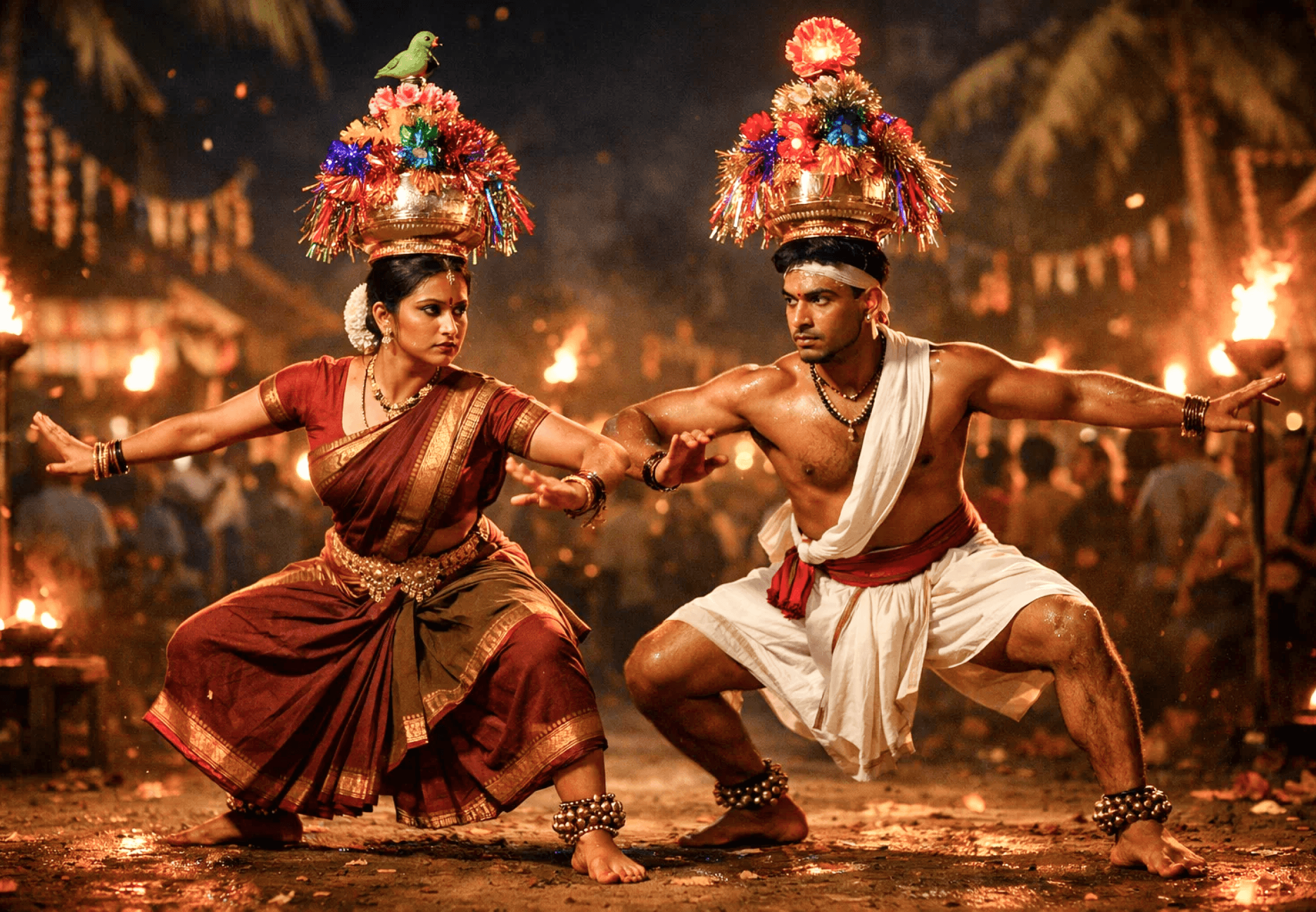
Karagaattam is a vibrant folk dance from Tamil Nadu, India, where performers balance a decorated pot (karagam) filled with water and topped with flowers and a parrot on their heads. Dedicated to goddess Mariamman, it blends acrobatics like ladder climbing and rhythmic swings, often during festivals for rain prayers.
Poikaal Kudirai
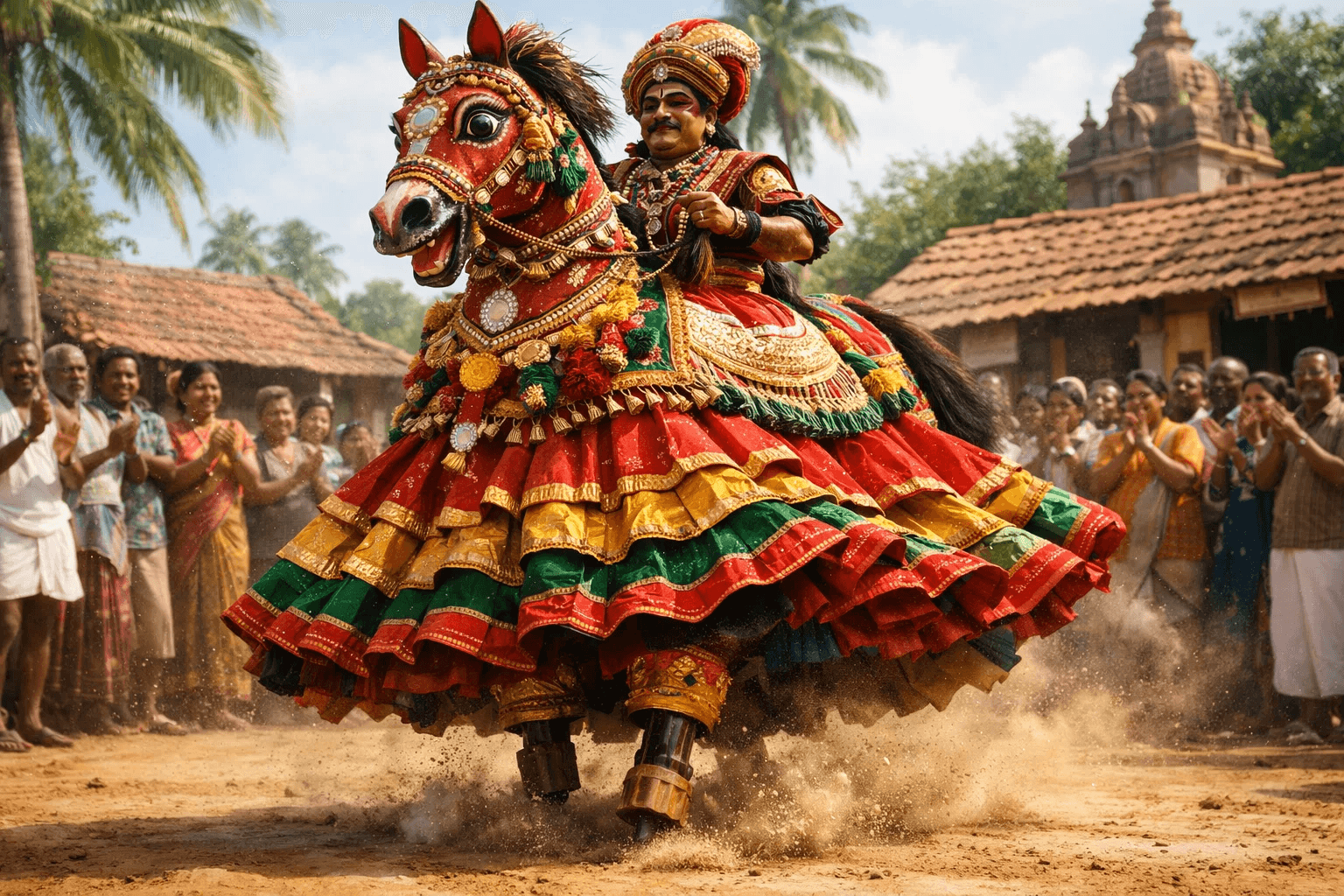
Poikaal Kudirai Aattam, or dummy horse dance, features dancers wearing lightweight fake horse costumes around their waists, mimicking galloping with skilled footwork and stunts. Rooted in Tamil Nadu legends of Goddess Durga,
it's performed at celebrations, possibly introduced by Maratha kings.
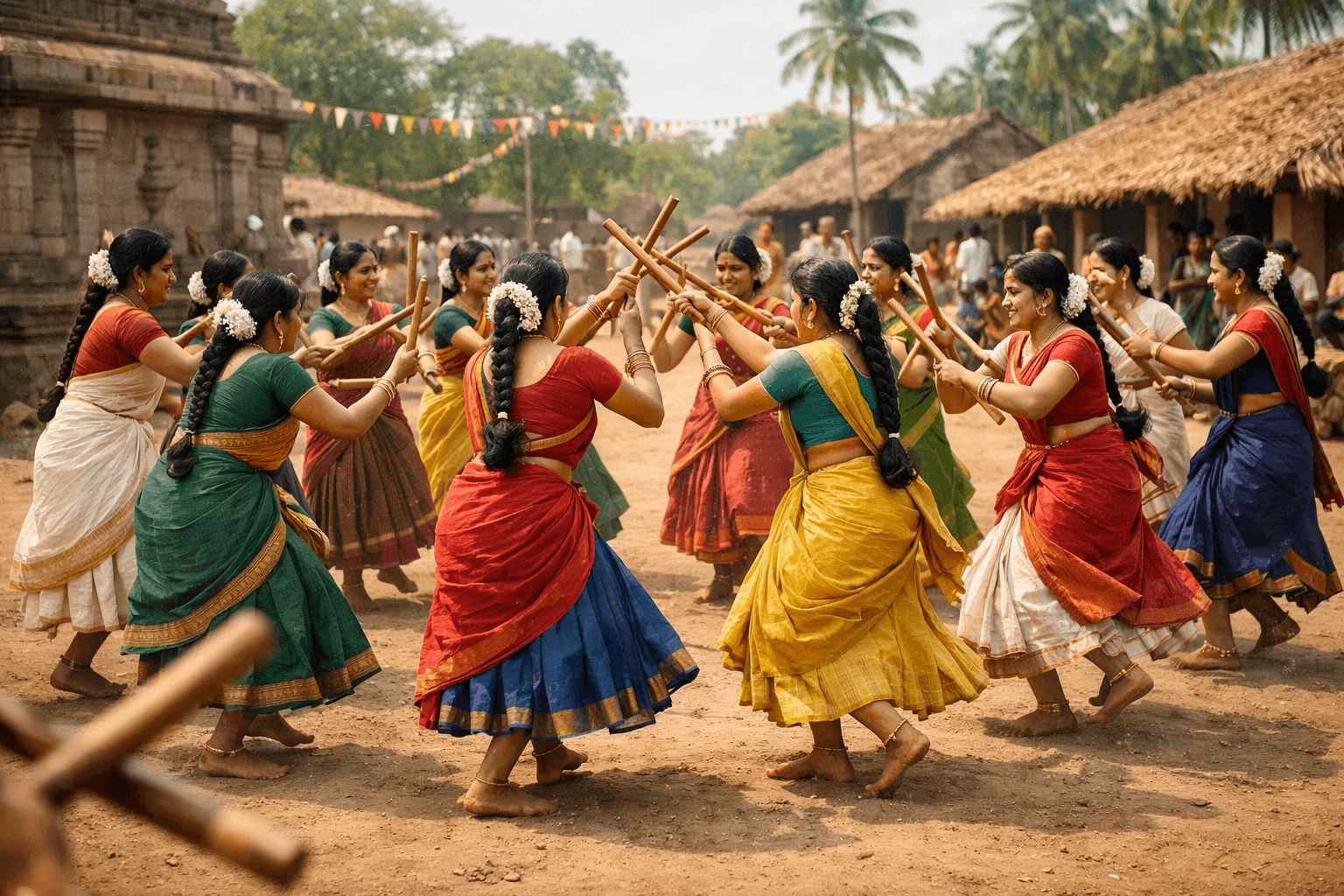
Kolattam
A vibrant folk dance from Tamil Nadu and Andhra Pradesh in South India. Women typically perform it in groups, striking short wooden sticks held in each hand to create rhythmic beats while singing folk songs. Dancers form circles, criss-crossing sticks in intricate patterns during festivals like Pongal or harvest celebrations, honouring deities.
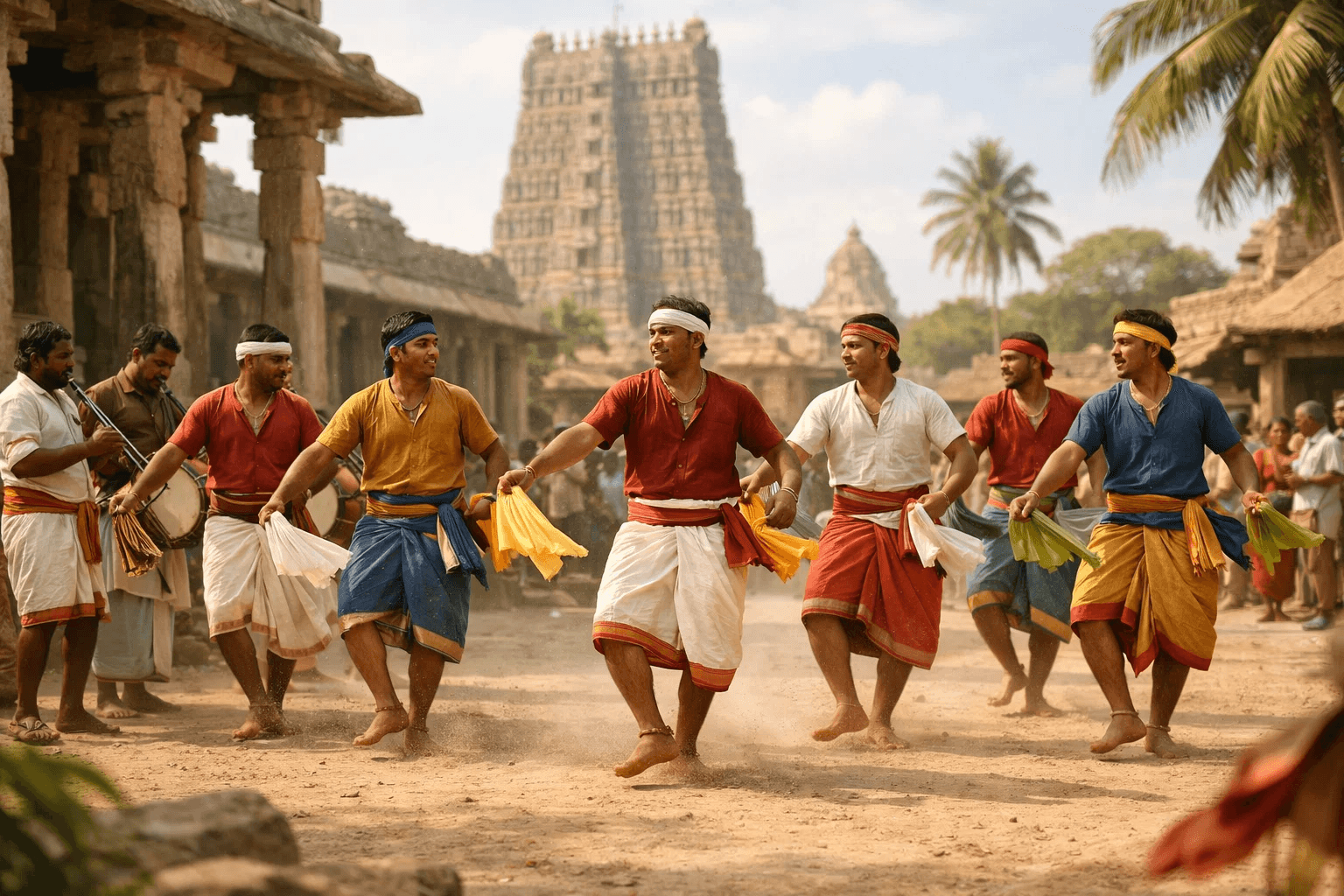
Oyilattam
A graceful folk dance originating from the Madurai region of Tamil Nadu, India. Traditionally performed by men in rows using coloured handkerchiefs and ankle bells to rhythmic thavil drum beats, it now includes women performers. Dancers execute synchronised steps at village festivals and post-harvest rituals to ward off birds from crops.
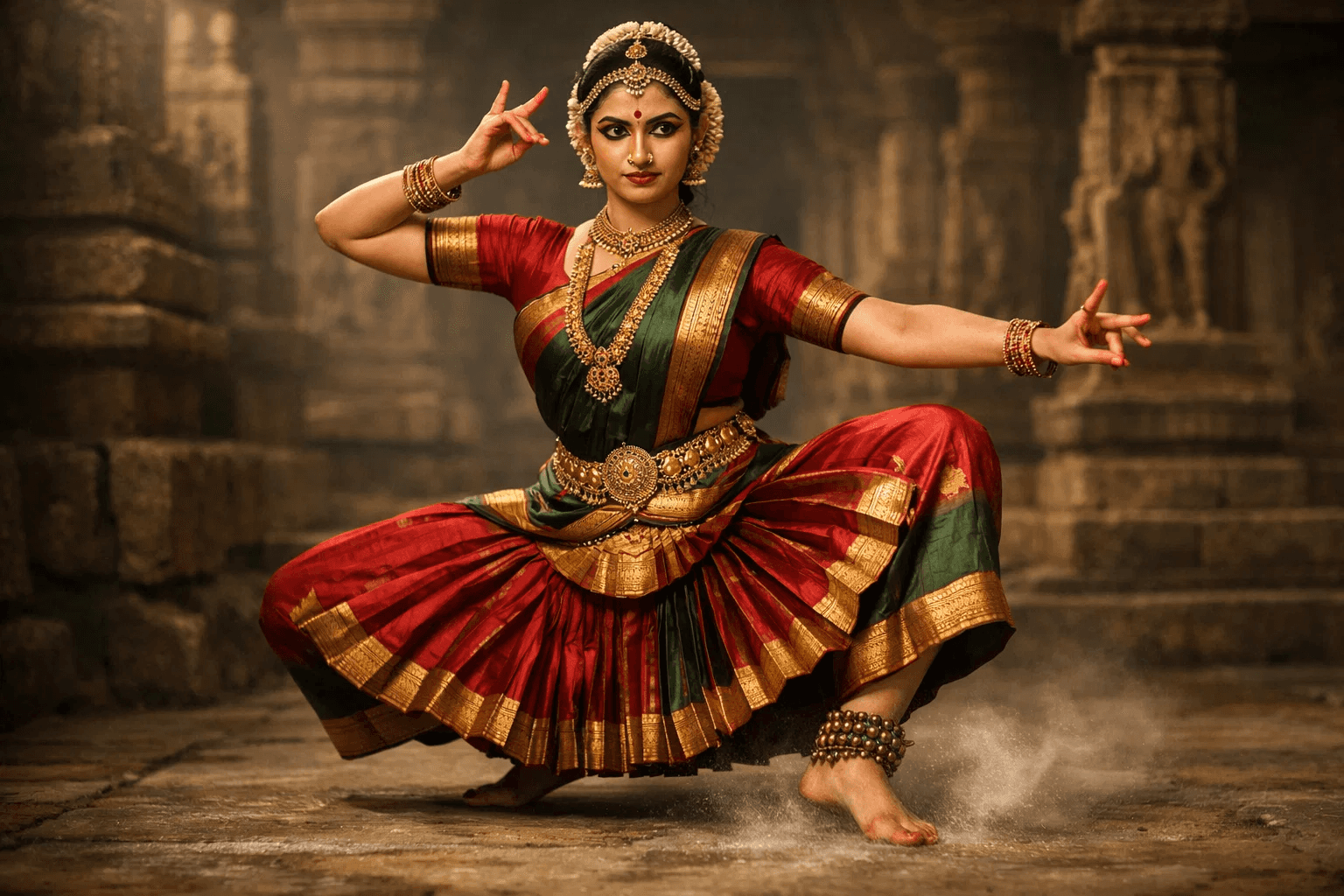
Bharatanatyam
Originated over 2,000 years ago in the temples of Tamil Nadu, South India. Performed by Devadasis to honour deities like Lord Shiva (Nataraja), it draws from the Natya Shastra, an ancient Sanskrit treatise on performing arts by sage Bharata around 200 BCE–200 CE. Sculptures in temples like Brihadeeswara and Thillai Nataraja depict its poses. It flourished under Chola, Pallava, Pandya, and Nayaka rulers (4th–19th centuries), The Tanjore Quartet—brothers Chinnayya, Ponnayya, Sivanandam, and Vadivelu—in the early 19th century refined its repertoire, music, and structure at Thanjavur courts. Declined under British rule due to social stigma against devadasis, it was revived in the 20th century by Rukmini Devi Arundale through Kalakshetra, elevating it to global stages.
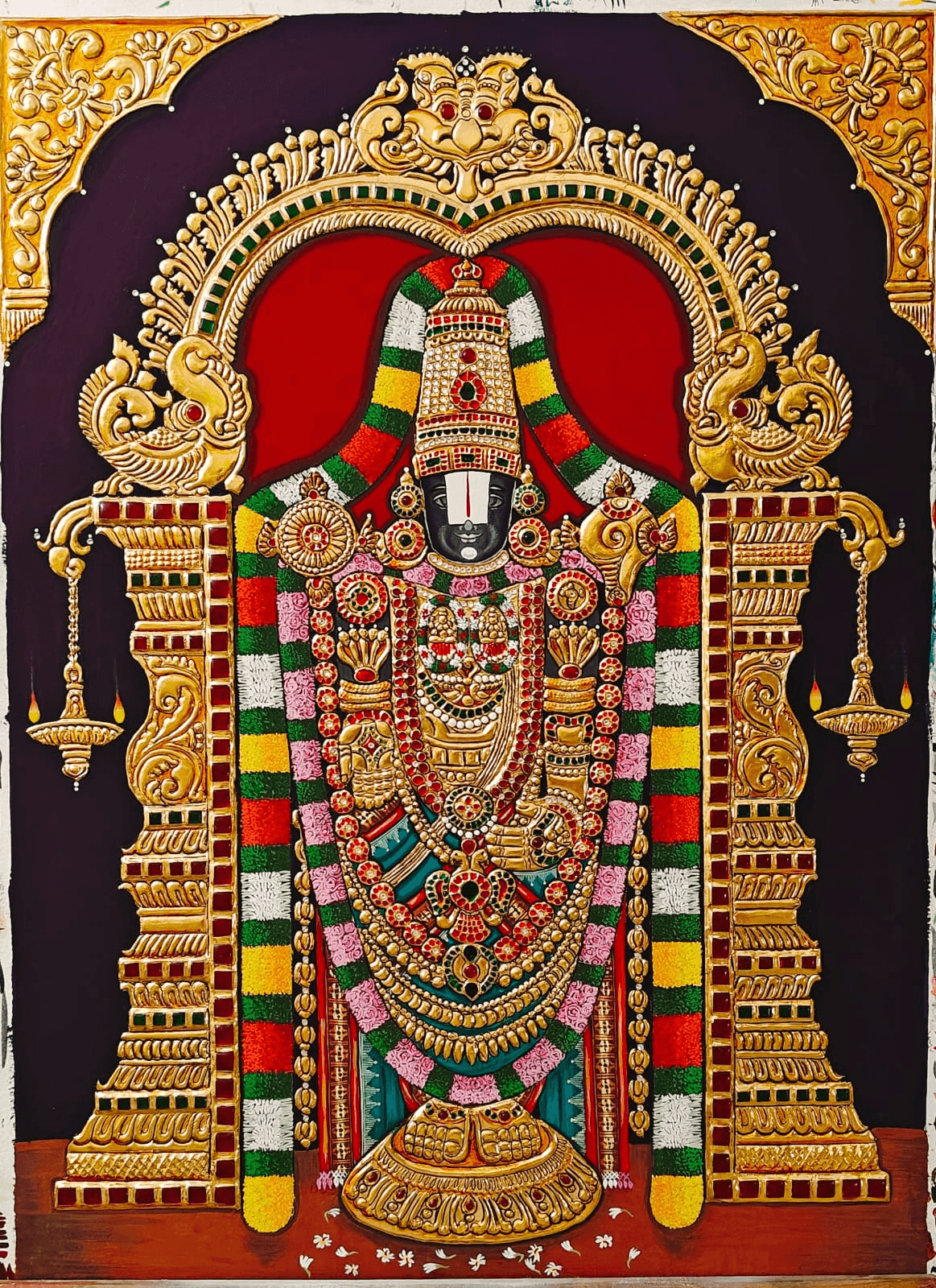
Thanjavur painting / Tanjore painting
A classical South Indian art form originating from Thanjavur in Tamil Nadu around 1600 AD under Nayaka patronage. These vibrant works depict Hindu deities, saints, and mythological scenes on wooden boards coated with gesso, featuring rich colours, gold foil overlays, glass beads, and semi-precious gems for a striking 3D effect. Characterised by bold compositions, rounded faces, and lavish embellishments, they blend Vijayanagara, Maratha, and European influences, serving as devotional icons in temples and homes.
Tamil folk arts are a living expression of the region’s cultural memory, storytelling traditions, and spiritual life. This section of the Literary Corner explores traditional Tamil folk art forms, showcasing performance styles that have been preserved through generations across villages and temple festivals of Tamil Nadu.
Art forms such as Therukoothu represent Tamil folk theatre at its most vibrant, combining music, dance, drama, and storytelling to narrate episodes from epics like the Mahabharata and Ramayana. Folk dance traditions like Karagattam reflect ritualistic devotion and community celebration, often performed during festivals and rain-invoking ceremonies.
Highly visual performance styles such as Poikal Kudirai Aattam bring mythology and local legends to life through dynamic movement and symbolic costumes, while group dances like Kolattam highlight rhythm, coordination, and collective expression during harvest and temple celebrations.
This page serves as a community-curated introduction to Tamil folk arts, designed for readers, students, and culture enthusiasts seeking to understand the traditional art forms of Tamil Nadu. The focus remains on authenticity, cultural context, and respectful representation of Tamil performing arts as living traditions rather than museum relics.